Chess betting odds — what the numbers mean and what they cost the punter
 Available in US
Current as of October 30, 2026 · Licence details checked against the Gambling Commission’s public register.
Chess is a three-outcome sport on a 64-square board. Every market the bookmaker writes is one of three sides — White wins, Black wins, or a draw — and the price on each side already carries the margin the firm keeps. That is the first thing to fix in the mind before looking at a chess betting odds quote. A 1.90 / 1.90 / 1.90 line on the three-way match odds market is not generosity: it is a margin of about 5.7%, sitting inside what looks like an even book. The punter’s job is to read the price, not to be flattered by it.
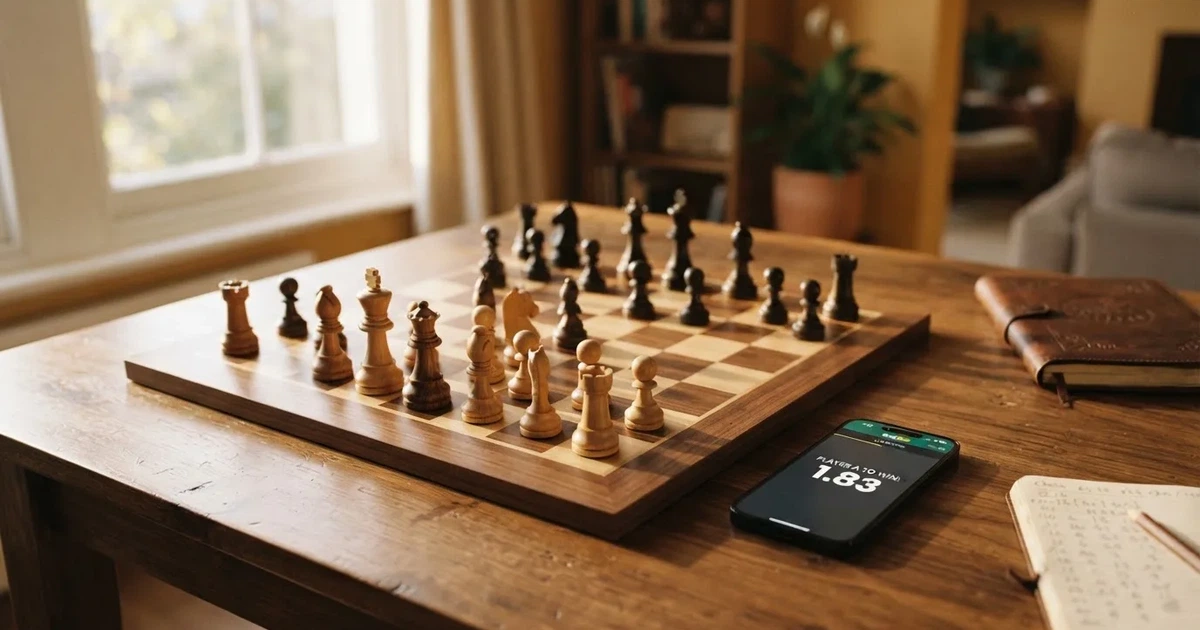
This guide walks through what the sport gives a bookmaker, what the law lets a bookmaker offer to customers in Great Britain, what the ten licensed brands in this comparison actually publish in their own terms, and where the cost of a chess bet really lives. It is built around the cluster of chess-related price questions searchers keep asking: where the sport sits inside the wider catalogue, who takes it seriously enough to publish a market, and how a return is calculated when a single leg comes in.
Where chess sits in a UK bookmaker’s programme
Chess is a niche in the British fixed-odds market. The big generalist brands carry it under their wider “other sports” menu, often without a dedicated tab on the homepage; the smaller and more specialist brands list it more clearly. Either way, the menu is the same in shape: pre-match 1X2 lines on titled events, tournament outrights on the Candidates and the World Championship cycle, and the occasional match-by-match market during elite rapid and blitz events.
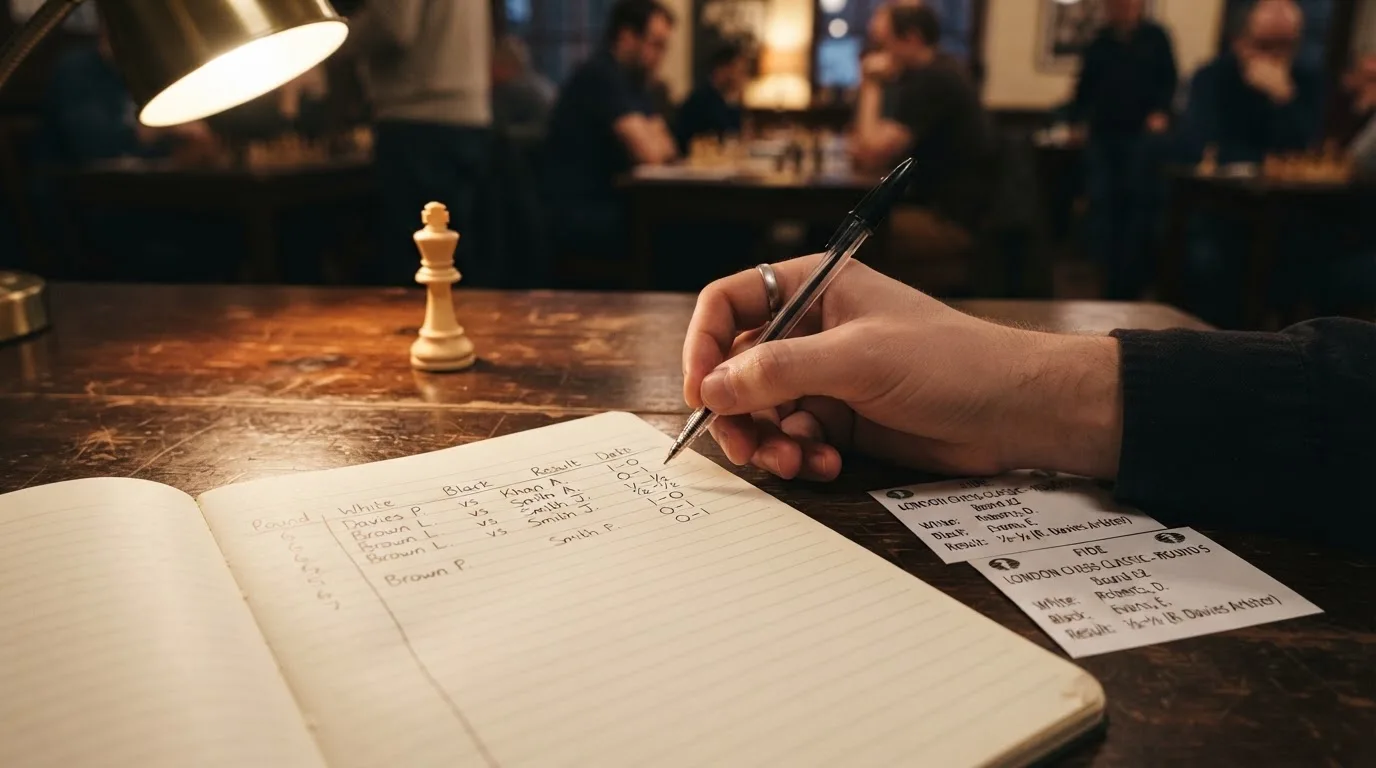
The tournament calendar gives the markets their backbone. FIDE — the International Chess Federation, the world governing body — runs the cycle that determines a challenger and a champion. The Candidates Tournament is the qualifier; the World Chess Championship match is the final; the rapid and blitz events sit between them as titled fixtures with real prices. Outright markets on these events are where the depth of a bookmaker’s chess offer tends to show itself, because pricing a 14-Grandmaster field a year in advance asks more of a trader’s desk than pricing one weekend’s football coupons.
A chess game itself is short on obvious hooks. Each side starts with 16 pieces on an 8×8 board, the rules are codified in the FIDE Handbook, and a game is recorded as 1–0 for a White win, 0–1 for a Black win and ½–½ for a draw. That three-result shape — win, loss, draw — is the engine of every market a bookmaker will offer on a single game. Outrights flatten the field to win-or-not-win; a single match carries the draw at a price of its own.
How chess results shape the markets a bookmaker writes
Three results, not two, is the structural fact of chess and the reason the simplest match market has three columns rather than two. Football can ignore the draw by design, because bookmakers decided decades ago that 1X2 was a useful enough lens for ninety minutes. Chess cannot: the draw is a fighting result, reached by stalemate, by agreement, by a claim of threefold repetition or the fifty-move rule under FIDE rules — and, since 2014, ended automatically by fivefold repetition or a 75-move rule.
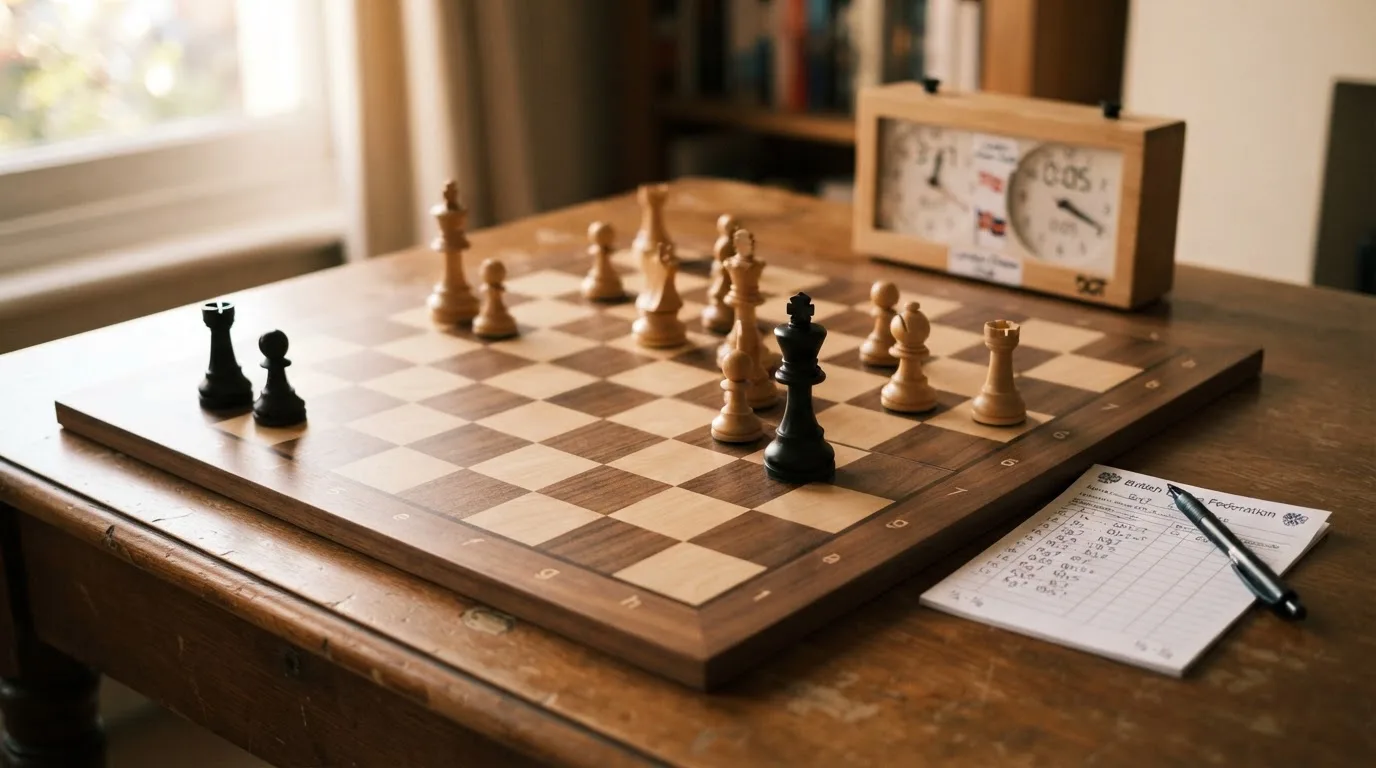
A market that prices all three outcomes therefore has to give the draw its own line. The match odds market on a single game is the cleanest example: one selection per side, plus the draw. Outrights on tournaments can simplify to win-or-not-win, and the larger bookmakers’ outright books do that; the per-game market never can. A chess trading desk that prices a Superbet rapid event to a half-point draw will not be forgiven for forgetting it.
A second structural fact: chess results come in often, because the top of the game is short on upsets at titled level. A bookmaker trading the Candidates takes a view on eight players over fourteen rounds, then watches a series of GMs trade blows for weeks. Long outright markets that lock in a price in October and settle the following April carry real exposure for the firm and a real margin for the punter — the longer the market stays open, the more the price reflects the bookmaker’s view of risk rather than a snapshot of form.
What the law says about offering chess to customers in Great Britain
There is no statutory list of permitted sports in Britain. A bookmaker serving customers in Great Britain holds an operating licence from the Gambling Commission under the Gambling Act 2005 — covers Great Britain (England, Scotland and Wales); Northern Ireland is outside the Act and has its own older law — and decides which sports and markets to publish under its own licence conditions. Chess is not on any list, banned or permitted; it sits on the menu because the bookmaker wants it there, and the menu is ruled by the firm’s own trading policy and the LCCP.
The Gambling (Licensing and Advertising) Act 2014 made it compulsory for an operator whose remote facilities are used in Great Britain to hold a Commission licence wherever it is based. A Curaçao, Maltese or Gibraltar licence is not a substitute. The Commission’s public register is the whole test of who holds one, and search by business name, trading name, domain or account number returns the licence number, the licence holder and the categories on the register. The remote general betting standard (real events) is the category a chess bookmaker operates under; remote general betting standard (virtual events), remote general betting limited, remote pool betting and remote betting intermediary are siblings on the same register, each governing a different kind of product. In-play betting on chess is not separately regulated; it is offered under the same remote general betting standard that covers any other real event, subject to the operator’s licence conditions and customer-protection duties. The controls are the operator’s, not a freestanding rule of law.
Identity verification before the first deposit means no anonymous play at a licensed site. Since 7 May 2019, name, address and date of birth are verified before a customer can deposit or gamble, including with a free bet or bonus; since 31 March 2020 every GB-licensed online operator has been a mandatory member of GAMSTOP, the national multi-operator self-exclusion scheme. A financial vulnerability check under LCCP condition 3.4.4, in force since 30 August 2024, applies when a customer’s deposits minus withdrawals exceed £150 in a rolling 30 days (since 28 February 2025); the check is a public-record check (bankruptcy or county court judgments, for instance), not an income check and not a credit reference check. None of these are about chess in particular — they apply to every licensed brand whether it lists chess or not — but they are the wall the licence sits inside.
What a licensed bookmaker has to give the punter by default
GAMSTOP is the most concrete of these protections. Every operator in this comparison is a GAMSTOP member, and a punter who has self-excluded cannot deposit, gamble or claim marketing at any of them while the exclusion is in place. Periods are six months, one year, five years, or five years with auto-renewal; after the minimum period, the exclusion stays in place for a further seven years unless the customer asks GAMSTOP to remove it. The scheme covers online sites and apps; betting shops use a separate service.
GambleAware, GamCare (the National Gambling Helpline) and Gamblers Anonymous are the support names the licensed brands link to. Several of the brands in this comparison — Fitzwilliam Sports is the clearest example — publish those links on their own homepage. Safer-gambling tools on the operator side: deposit limits, timeouts, self-exclusion and reality checks are all part of the LCCP, and a customer at any one of the ten can set them without asking. The operator’s own safer-gambling page is where these controls actually live, and reading it once is a better preparation for a chess bet than reading a price.
The 10x cap on bonus wagering, in force since 19 January 2026, applies across the board. A £10 bonus at 50x wagering needed £500 of bets before the cap; under the cap, no more than £100. Mixed-product promotions — an offer that requires gambling on two or more product types, betting and casino for example — are banned. Credit cards have been off the table for gambling in Great Britain since 14 April 2020, including credit-card-funded payments through an e-wallet; debit cards and bank-based payments are not covered by that ban. None of this changes the chess market itself. It changes the offer that sits on top of the market.
Mobile and app coverage
Chess is a small sport on a small screen. None of the apps in this comparison publish a dedicated chess tab on the home page; the sport sits under “Other Sports” or a search box, and the punter types “chess” to get to it. That is the price of being a niche on a sportsbook that covers football, horse racing, tennis and the rest of the British core catalogue.
The wider coverage is otherwise what a punters in 2026 expects from a British bookmaker app. The Betfred Sports, Casino & Games app covers 21 sports plus over 2,000 casino-style games. Paddy Power’s app covers football, horse racing, boxing, rugby, tennis, golf, darts, snooker and F1 — the core British catalogue plus a few sideline sports. The Lottoland UK app combines casino, lottery betting, sports betting and scratchcards; it carries sports on top of a lottery-led product. DragonBet’s app, published by dragonbet ltd, carries Welsh football and rugby markets, racing, American football, in-play betting and bet builder markets — a regional bookmaker with a regional focus. Bar One Racing, which now trades as BAR 1 Betting, is an Irish independent bookmaker with shops across Ireland and horse racing sponsorships at Dundalk, Fairyhouse, Navan, The Curragh, Curraheen Park and Cork; the app carries the racing side first, with chess a search-box away.
There is no meaningful chess-specific functionality on any of them. The thing that changes the user experience is what each app does well on its home territory: in-play betting and live streaming on the bigger books, racing markets and Best Odds Guaranteed on the racing-led books, region-specific markets on the regional ones. For chess specifically, what the app gives the punter is access to a market the firm has decided to publish — and what it does not give is a custom chess trading screen.
Live betting and cash out on chess
In-play on chess is a thin market. The games at elite level last hours, the move structure is slow compared with a football match, and a punters betting live is taking a position on the shape of an ending that may not arrive for ninety more moves. The larger books will price in-play on titled events — Candidates matches, World Championship games, elite club events — and close the market between moves. The smaller books close it altogether.
Cash out sits on top of the in-play market, not in place of it. The feature gives the punter the option to lock in a return before the final result is in, at a price the bookmaker quotes at the moment of the cash out. On chess, that means a price on the current board state — a winning position, a drawn ending — rather than a price on the named result. A bookmaker that offers cash out on football offers it on chess too, on the markets it has running; a bookmaker that does not offer cash out at all does not offer it on chess either. The feature is product-wide.
The deeper live-betting books in this comparison — bet365 is the clearest example, with in-play betting and live streaming of events worldwide, plus Bet Track, Match Live and a Live Golf Tracker for following bets in play — carry the depth of event coverage that lets a punter get a chess market open during a game rather than only before it. The smaller books carry less of that depth, and chess is the first sport to feel the cut.
Predictions, strategy and what “tips” mean on a three-result market
Chess tips have a long tradition as well as a short one. The match odds market on a single game is hard to call from the outside: the bookmaker’s price reflects the trader’s view of the rating gap, the colour sequence, recent form and the time control, and an external tipster has to beat that aggregate to make the price worth taking. Outright markets on titled events are where the chess tip industry sits, and the tipsters who do well at it lean on engines and databases rather than hunch.
The strategy question a punters actually has to ask is what the price implies. A bookmaker’s margin sits inside every price, and the margin is what tips cannot beat — a tip that lands 53% of the time at decimal odds 1.90 still loses money, because the margin between the true odds and the price clears the edge. The only way a tip wins over a run of bets is if it lands more often than the price implies, by enough to clear the margin. That is the strategy on any sport; chess is no different, and neither is football.
Where chess tips do their work is in outright markets, where the price locks in early and the field plays out over weeks. A price on the World Chess Championship in October that reflects the bookmaker’s view of the Candidates field is a price a tipster with a strong view on form can take a position on. A price on a single game the morning of the match is harder to beat, because the bookmaker’s view is more current.
Bet types and how a chess price settles
Match odds on a single game is the spine of the market: pick White, pick Black, or pick the draw, at a price the bookmaker has published for that game. Outrights on a tournament pick the winner of the field. The two are the bookend markets a bookmaker either offers or does not; everything else is layered on top.
A bet builder on chess is rare at titled level, because the markets a bet builder combines are themselves rare on a single chess game. The bet builder product at the larger British books — bet365’s Bet Builder+, which combines markets from one event into a single bet and is available pre-match and in-play — is a feature that lives mostly on football and the major US sports. Chess does not get a meaningful bet builder because there is not enough within-game market depth to build one with. NetBet’s Bet Builder, with its instant dynamic odds, and Midnite’s acca builder are similar products in shape; chess is not where they shine.
Free bets and the credit side of the offer are product-wide as well. A free bet at any of the ten licensed brands can be staked on a chess market where the bookmaker accepts a free bet, with the usual condition that the stake is not returned with a winning free bet. A “risk-free” bet refunded as a free bet is not a refund in money. The credit shape of the offer is the same on chess as it is on football; the price the credit is taken at is the price the punter pays for the credit.
How a return is calculated
A return on a single bet is the simplest piece of arithmetic on the page. The formula is:
- Return = stake × decimal odds
- Net profit = stake × (decimal odds − 1)
A £10 stake at decimal odds 2.50 returns £25 in total, of which £15 is profit and £10 is the stake returned. At decimal odds 1.50, the same £10 returns £15, of which £5 is profit. The stake is always part of the return, never a deduction from it.
On a combination bet the odds of the legs multiply into one price. A double at decimal odds 2.00 and 3.00 is a single bet at decimal odds 6.00 — three times two, with no margin added at the join because the margin already sits in each leg. A treble at 2.00, 3.00 and 4.00 is a single bet at decimal odds 24.00. Each-way betting doubles the stake (two bets of equal stake: a win bet and a place bet), and place terms vary by race and operator — chess is not the home of each-way betting, but the rule is the same wherever the product is offered.
Fractional odds convert to decimal by a/b → a ÷ b + 1. Fractional 5/1 is decimal 6.00; fractional 11/4 is decimal 3.75; fractional evens is decimal 2.00. Odds-on prices — shorter than evens, fractional 4/6 for example — sit below 2.00 in decimal form and return less than twice the stake on a win.
How the bookmaker’s margin sits inside a price
Every price on a chess market carries the bookmaker’s overround, and the overround is the margin the firm keeps of every unit bet on this market. The arithmetic, on a two-way market, is:
- Payout share = 1 ÷ (1/odds₁ + 1/odds₂)
- Margin = 1 − payout share
On an illustrative two-way market priced at decimal odds 1.90 / 1.90, the calculation runs: 1 ÷ (1/1.90 + 1/1.90) = 1 ÷ (0.5263 + 0.5263) = 1 ÷ 1.0526 = 0.9500, and the margin is 1 − 0.9500 = 0.0500, or about 5.0%. That is a snapshot, not a guarantee — a margin of 5% on a single illustrative market, calculated for one specific price, with no claim on what the margin would be on the same market at a different price or on a different event. The maths is the maths; the market is the market.
The same calculation on a three-way chess match odds market at decimal odds 2.10 / 2.10 / 3.60 — White, Black, draw — runs: 1 ÷ (1/2.10 + 1/2.10 + 1/3.60) = 1 ÷ (0.4762 + 0.4762 + 0.2778) = 1 ÷ 1.2302 = 0.8129, and the margin is 1 − 0.8129 = 0.1871, or about 18.7%. The margin jumps because the market has three outcomes rather than two, and the bookmaker has to cover the third one it could have ignored on a different sport. A higher margin is what three-outcome sports cost the punters, and a three-outcome sport is what chess is.
The single most useful thing to do with a price is the calculation. The whole bookmaker edge, in a two-way market priced at 1.90 / 1.90, is between 4.5% and 5.5% on a snapshot at any one bookmaker; on a three-way chess market it is between roughly 15% and 20%. A punters who can read the margin can compare books on the same market; a punters who cannot is comparing marketing.
How the ten licensed brands in this comparison shape up
The ten brands below are the operators whose domain appears on the Gambling Commission’s public register against a licence holder with a remote general betting standard (real events) category. This is not a ranking. It is a check on licence status, with the brand’s own offer described only as the brand’s own terms state it. Every licence is current as of the snapshot date this page carries, and any operator detail comes from each brand’s own terms.
Betfred — the high-street bookmaker
The Betfred Sports, Casino & Games app is published by Done Brothers (Cash Betting) Ltd and covers 21 sports plus over 2,000 casino-style games. The licence is Gambling Commission account 39544 (remote licence 039544-R-319290-010), licence holder Petfre (Gibraltar) Limited, category remote general betting standard (real events). Petfre is the trading name Betfred has used for years; the brand is the same one.
Betfred’s chess coverage sits inside a wider catalogue built around horse racing, football and greyhounds. The product that matters on chess is the match odds market on titled events, and the firm offers it without a great deal of fanfare. Where Betfred is strong is the racing side and the in-store presence, not the niche sports — chess falls under the niche. For a punter who wants a familiar British brand with a working licence and a deep app catalogue, Betfred fits; for a punter who wants a bookmaker that has staked its reputation on chess specifically, it does not.
The verdict, then, is the familiar one: a bookmaker that offers chess as one sport among many, on a remote licence it has held for years. The punter who already has a Betfred account will not need to open another one to get a chess bet on. The punter opening one for the chess offer alone will find the catalogue broader than the niche.
BetMGM — the transatlantic brand with a sports welcome
BetMGM’s sports welcome offer for new UK customers who deposit £10 or more and place a sports bet within 7 days is four £10 free bets — two football accumulators of 4+ selections and two sports multiples of 2+ — valid for 7 days, with minimum odds and an opt-in required. The licence is Gambling Commission account 39198 (remote licence 039198-R-319450-029), licence holder LeoVegas Gaming PLC, category remote general betting standard (real events). LeoVegas Gaming PLC is the company that runs BetMGM in the UK under a brand licence from MGM Resorts; BetMGM UK is the trading face, LeoVegas is the licence holder.
The welcome shape tells the punter something about the menu: the offer is built around football accumulators and sports multiples, the products the firm expects most new sign-ups to use. Chess is not in the welcome structure, and a punter claiming the offer will use it on football or another multi-leg product. The wider app, BetMGM Online Casino & Sports, is a casino-first product with a sportsbook on top — the trading direction is the casino side, the sports side is the smaller half.
For a punter who already bets on football and wants a sportsbook tied to a casino product, BetMGM fits. For a punter who wants a chess-first bookmaker, it does not. The licence is current and the catalogue is broad; the chess market is one sport among many on a wider product.
Bet600 — the racing bookmaker with Best Odds Guaranteed
Bet600 pays Best Odds Guaranteed on horse racing: if the starting price is bigger than the early or show price taken, the bet is paid at the SP. The licence is Gambling Commission account 44731 (remote licence 044731-R-323941-016), licence holder Tyche Tech Limited, category remote general betting standard (real events). Tyche Tech Limited is the company behind the Bet600 brand; the licence is a remote general betting standard, and BOG on racing is a feature of the racing offer, not the chess one.
The chess offer is not the headline product. Bet600 is a racing-led bookmaker, and the racing side is what the firm is known for; chess is a smaller part of a broader sportsbook. For a punter who bets on horse racing and wants a BOG guarantee on the racing side, Bet600 is a fit; for a punter who wants a bookmaker that has built a chess offer specifically, it is not. The licence is current; the product depth on chess is not the strength.
10bet — the multi-feature sportsbook
10bet’s sportsbook covers football, tennis and horse racing, with Cash out, Bet Builder and Live Streaming. The licence is Gambling Commission account 43173 (remote licence 043173-R-322899-023), licence holder Blue Star Planet Limited, category remote general betting standard (real events). Blue Star Planet is the company behind 10bet; the licence is current and the categories on the register cover the sportsbook.
The features are the spine of the offer. Cash out, Bet Builder and Live Streaming on a sportsbook that covers football, tennis and horse racing is a broad catalogue with the in-demand features wired in. Chess does not get its own tab in the published app description, but the wider sportsbook carries enough markets to surface a chess outright during a titled event. The punter who wants the cash out feature on a wider range of sports will find it at 10bet; the punter who wants the feature specifically on chess will need to check the market the day of the event.
DragonBet — the regional Welsh bookmaker
DragonBet’s app is published by dragonbet ltd and features Welsh football and rugby markets, racing, American football, in-play betting and bet builder markets. The licence is Gambling Commission account 64908 (remote licence 064908-R-339041-003), licence holder DragonBet Ltd, category remote general betting standard (real events). DragonBet is a Welsh-led regional bookmaker; the regional focus is the brand.
The chess offer is not the headline, and the regional bookmaker angle is. A Welsh football and rugby bookmaker is a narrow product, and chess sits at the edge of even that narrow product. For a punter with a Welsh sports interest and a wider sportsbook habit, the brand fits; for a punter with a chess-first interest, the regional catalogue is the wrong shape. The licence is current; the chess depth is not what the brand is for.
Fitzwilliam Sports — the Dublin bookmaker with capped membership
Fitzwilliam Sports describes itself as a Dublin bookmaker with capped membership, and its welcome is a “High Stakes Welcome” subject to compliance criteria. The licence is Gambling Commission account 48760 (remote licence 048760-R-335434-009), licence holder SBKI Limited, category remote general betting standard (real events). SBKI Limited is the company behind the Fitzwilliam Sports brand; the licence covers the remote general betting standard that any sportsbook operating into GB needs.
The bookmaker offers instant deposits, fast withdrawals, timeouts and deposit limits, and links to GambleAware, GamStop and Gamblers Anonymous on its own home page. The safer-gambling side is visible, and the safer-gambling links are on the homepage. The “High Stakes Welcome” shape suggests the firm is targeting larger-stake customers, not the everyday punter — a “subject to compliance criteria” is not the same as a free bet offer, and the criteria are the firm’s own. For a high-stake chess punter looking for a bookmaker with a Dublin pedigree and a current GB remote licence, Fitzwilliam Sports fits; for a small-stake punter looking for a welcome bonus to take down, it does not.
Bar One Racing — the Irish independent rebranded
Bar One Racing has rebranded as BAR 1 Betting, an Irish independent bookmaker with shops across Ireland and horse racing sponsorships at Dundalk, Fairyhouse, Navan, The Curragh, Curraheen Park and Cork. The licence is Gambling Commission account 56516 (remote licence 056516-R-332750-007), licence holder Bar-One Racing Limited, category remote general betting standard (real events). The rebrand to BAR 1 Betting is the trading face, Bar-One Racing Limited is the licence holder.
The brand is racing-led, with shops and racing the spine. Chess is a small part of a wider sportsbook; the racing sponsorships and the shop presence tell the punter where the firm has put its money. For a punter who bets on Irish racing and wants a brand tied to Irish racecourses, BAR 1 Betting fits; for a punter who wants a chess-led bookmaker, the racing spine is the wrong shape. The licence is current; the chess depth is not where the firm is aiming.
Midnite — the newer brand with a sports welcome
Midnite’s sports welcome offer: new customers who bet £5 or more on pre-match odds of EVS (2.0) or greater within 14 days of sign-up receive £25 in free bets and 50 free spins, valid for 7 days. The licence is Gambling Commission account 101839 (remote licence 101839-R-342850-001), licence holder Midnite Limited, category remote general betting standard (real events). Midnite’s site cites the licence number 101839 and shows in-play events, an acca builder, popular accas and price boosts with maximum-stake limits.
The product depth is the draw. In-play events, an acca builder, popular accas, price boosts — the modern sportsbook feature set, on a brand with a current licence. The welcome shape is a small qualifying bet on EVS-or-greater, returning £25 in free bets plus 50 free spins; the qualifying odds condition is on the pre-match side, the free spins are casino product. For a punter who wants a modern sportsbook feature set on a current licence, Midnite fits; for a punter who wants a brand that has staked its reputation on chess, the catalogue is broader than the niche.
Paddy Power — the high-street name with a wide app
The Paddy Power Sports Betting app is published by Paddy Power PLC and covers football, horse racing, boxing, rugby, tennis, golf, darts, snooker and F1. The licence is Gambling Commission account 39439 (remote licence 039439-R-319330-013), licence holder PPB Counterparty Services Limited, category remote general betting standard (real events). PPB Counterparty Services Limited is the licence holder behind the Paddy Power trading face; Paddy Power PLC is the publishing company on the app.
The catalogue is the British core, with a deep racing and football spine. Chess is a niche on a sportsbook built around the high-street catalogue, not a headline product. For a punter who already has a Paddy Power account and wants to add a chess bet to a wider betting habit, Paddy Power fits; for a punter opening an account for the chess offer alone, the catalogue is broader than the niche.
NetBet — the sportsbook with boosts and a Bet Builder
NetBet Sport offers Daily Boosts, Profit Boosts and free bet offers, a Bet Builder with instant dynamic odds, and sports stats for major leagues. The licence is Gambling Commission account 39170 (remote licence 039170-R-319343-032), licence holder Netbet Enterprises Limited, category remote general betting standard (real events). The licence covers the sportsbook; the offer list on the app description names the feature set.
Daily Boosts and Profit Boosts are the price-shape features; free bet offers are the credit side; the Bet Builder with instant dynamic odds is the in-event product. Chess is not a named sport in the published app description; the wider sportsbook carries enough markets to surface a chess outright during a titled event, and the boost features apply to whatever markets the firm lists. For a punter who wants the boost and bet builder feature set on a current licence, NetBet fits; for a punter who wants a chess-first bookmaker, the catalogue is broader than the niche.
A side-by-side look at licence status and chess coverage
The table below sets the ten licensed brands against the matters the page has covered: the Gambling Commission licence number and licence holder, and what each operator’s own terms state on the chess key. Cells reflect only what each brand’s own published materials and the Commission’s register say; the table is a comparison of licence status and product shape, not a ranking.
| Brand | Licence number and holder | What the operator’s own terms state on chess |
|---|---|---|
| Betfred | Account 39544 (remote licence 039544-R-319290-010); licence holder Petfre (Gibraltar) Limited | App covers 21 sports plus over 2,000 casino-style games; chess sits inside the wider “other sports” menu on a familiar high-street brand |
| BetMGM | Account 39198 (remote licence 039198-R-319450-029); licence holder LeoVegas Gaming PLC | Sports welcome offer built around football accumulators and sports multiples; chess not in the welcome shape; sportsbook sits on a casino-first product |
| Bet600 | Account 44731 (remote licence 044731-R-323941-016); licence holder Tyche Tech Limited | Best Odds Guaranteed on horse racing; racing-led sportsbook; chess is one sport among many |
| 10bet | Account 43173 (remote licence 043173-R-322899-023); licence holder Blue Star Planet Limited | Cash out, Bet Builder and Live Streaming on a sportsbook covering football, tennis and horse racing; chess is part of the wider catalogue |
| DragonBet | Account 64908 (remote licence 064908-R-339041-003); licence holder DragonBet Ltd | Welsh football and rugby markets, racing, American football, in-play and bet builder; chess is not the headline product |
| Fitzwilliam Sports | Account 48760 (remote licence 048760-R-335434-009); licence holder SBKI Limited | Dublin bookmaker with capped membership; safer-gambling links on the homepage; chess depth not detailed in published materials |
| BAR 1 Betting | Account 56516 (remote licence 056516-R-332750-007); licence holder Bar-One Racing Limited | Irish independent bookmaker rebranded from Bar One Racing; racing sponsorships and shop presence; chess depth not the brand’s focus |
| Midnite | Account 101839 (remote licence 101839-R-342850-001); licence holder Midnite Limited | In-play events, acca builder, popular accas and price boosts; sports welcome shape tied to a £5+ qualifying bet at EVS-or-greater |
| Paddy Power | Account 39439 (remote licence 039439-R-319330-013); licence holder PPB Counterparty Services Limited | App covers football, horse racing, boxing, rugby, tennis, golf, darts, snooker and F1; chess is a search-box away on a wider catalogue |
| NetBet | Account 39170 (remote licence 039170-R-319343-032); licence holder Netbet Enterprises Limited | Daily Boosts, Profit Boosts, free bet offers, Bet Builder with instant dynamic odds; chess depth not the published headline |
The licence line on every row is a current entry on the Commission’s register; the right-hand column is what the brand’s own published materials state, in the brand’s own words, on the chess key or on the wider product the chess offer sits inside. No row claims a chess depth the brand has not claimed for itself.
The chess betting market in one read
The short version, for a punter who has read this far and wants the shape of it in a paragraph. Chess is a three-result sport on a 64-square board, the rules are codified by FIDE, the cycle is run by FIDE and the matches are titled events the bookmakers price into outrights and per-game markets. In Great Britain the question of whether a brand is allowed to take a chess bet is settled by the Commission’s public register — a remote general betting standard (real events) licence covers it, and every brand in this comparison holds one. The cost of a chess bet sits in two places: the price itself, which carries the bookmaker’s margin (a two-way market at 1.90 / 1.90 holds about 5%, a three-way chess match odds market holds more), and the offer on top of the price, which carries its own conditions. The brand-level choice is between the high-street catalogue (Betfred, Paddy Power, BetMGM), the racing-led book (Bet600, BAR 1 Betting), the multi-feature sportsbook (10bet, Midnite, NetBet), the regional book (DragonBet) and the membership-shaped book (Fitzwilliam Sports). The punter’s task is to read the licence, read the price and read the offer, in that order.
The reason that order matters is that no single brand is “the only” licensed one — the Commission’s register lists every brand that holds a remote general betting standard (real events) licence, and the comparison above is a subset of that register, not the whole of it. A licence is the entry ticket, not the verdict. The verdict is the price.
What the operator comparison actually settles
Two patterns carry through. First, the licence: every brand on the list is current on the Commission’s public register under the remote general betting standard (real events) category. That is the floor for any comparison on this page — every brand in this comparison has it, and the comparison is not about which one has a licence. The brands differ in who holds the licence on their behalf (Petfre for Betfred, LeoVegas Gaming for BetMGM, Tyche Tech for Bet600, Blue Star Planet for 10bet, DragonBet for DragonBet, SBKI for Fitzwilliam Sports, Bar-One Racing for BAR 1 Betting, Midnite for Midnite, PPB Counterparty Services for Paddy Power, Netbet Enterprises for NetBet), and the licence holder is the legal name behind the trading face.
Second, the product shape. The high-street catalogue (Betfred, Paddy Power, BetMGM) carries chess as one sport among many, with the wider British sports spine. The racing-led book (Bet600, BAR 1 Betting) carries chess as part of a wider sportsbook built around horse racing. The multi-feature sportsbook (10bet, Midnite, NetBet) carries the cash out, bet builder and price boost features that the modern sportsbook product has, and chess is one sport among many. The regional book (DragonBet) carries a regional catalogue, with chess at the edge. The membership-shaped book (Fitzwilliam Sports) carries a “High Stakes Welcome” subject to compliance criteria, and the safer-gambling links on the homepage. None of these patterns is a verdict; each is a shape, and the verdict is what the punter does with the shape.
The punter who wants a familiar British brand with a working licence and a deep app catalogue will land on Betfred, Paddy Power or BetMGM. The punter who wants the modern sportsbook feature set will land on 10bet, Midnite or NetBet. The punter with a regional or a racing-led interest will land on DragonBet, Bet600 or BAR 1 Betting. The high-stakes punter with a Dublin bookmaker in mind will land on Fitzwilliam Sports. The chess-first punter, across all ten, will find the chess offer on each, and decide the difference on price.
The thing the page has not said
A page on chess betting odds can describe the sport, the licences and the brands, and it can calculate the return on a stake and the margin inside a price. What it cannot do, and what no comparison on this page tries to do, is name the winner of a chess match. A price on White at decimal odds 2.10 is not a prediction that White wins; it is the bookmaker’s view of the probability of a White win, with a margin folded in. A tip from a tipster is not a forecast; it is the tipster’s view of the price. The page’s job is to make the price legible. The punter’s job is to decide whether to take it.
That is also the gap between a licensed brand and an unlicensed one. The licensed brand, under Commission rules, verifies the punter’s identity before the first deposit, offers GAMSTOP self-exclusion, applies the financial vulnerability check at £150 of net deposits in a rolling 30 days, caps bonus wagering at 10x and bans credit card deposits. The unlicensed brand does none of these things, and the punter using one loses access to the Commission’s complaints route, the approved dispute-resolution body and British consumer redress if funds are withheld. The page does not say “use the licensed brand” — that is for the punter to decide. It says the licensed brand is what the licence describes.
Frequently asked questions
Where can a chess bet be placed?
A chess bet can be placed at any of the ten Gambling Commission-licensed brands listed in this comparison, or at any other GB-licensed remote betting operator on the Commission’s public register. The licensed brands in this guide are Betfred, BetMGM, Bet600, 10bet, DragonBet, Fitzwilliam Sports, BAR 1 Betting, Midnite, Paddy Power and NetBet. Each holds a remote general betting standard (real events) licence.
Is chess betting legal in Great Britain?
Chess betting is legal in Great Britain at any operator that holds a Gambling Commission remote licence under the Gambling Act 2005. There is no statutory list of permitted sports; chess is permitted because the operator chooses to offer it, under its own licence conditions. Northern Ireland is outside the 2005 Act and has its own older law. A bookmaker based outside Great Britain still needs a Commission licence to serve GB customers.
How does a chess bet actually work?
A chess bet works like any other fixed-odds bet: pick a selection — White wins, Black wins, draw on a single game, or a named player to win an outright — at a price the bookmaker has published. If the selection wins, the stake multiplied by the decimal odds is returned. If it loses, the stake is lost. Combination bets multiply the odds of the legs into one price, and each-way betting doubles the stake.
How can a bookmaker’s Gambling Commission licence be checked?
A bookmaker’s Gambling Commission licence can be checked by searching the Commission’s public register by business name, trading name, domain or account number. The register returns the licence number, the licence holder and the categories on the register, including remote general betting standard (real events) for a sportsbook. The register is the whole test of whether a brand holds a licence.
How is a return worked out from the stake and the odds?
The return is the stake multiplied by the decimal odds. Net profit is the stake multiplied by the decimal odds minus one, with the stake returned separately. A £10 stake at decimal odds 2.50 returns £25 in total, of which £15 is profit. Fractional odds convert to decimal by a/b → a ÷ b + 1: fractional 5/1 is decimal 6.00.
What is the bookmaker’s margin, and how is it seen in the odds?
The bookmaker’s margin is the share of every unit bet on a market that the firm keeps, on average. On a two-way market at decimal odds 1.90 / 1.90, the calculation runs 1 ÷ (1/1.90 + 1/1.90) = 0.95, so the payout share is 95% and the margin is about 5%. On a three-way chess match odds market at 2.10 / 2.10 / 3.60 the calculation gives a payout share of about 81% and a margin of about 19%.
Tennis, darts & cue sports – Matchedbettinguk.com
Content created by the «Matchedbettinguk.com» team
